One Jacket, Two Silhouettes: The Role of Proportion
One jacket, two silhouettes: adjust the layers beneath it to create distinct proportions, then choose the combination that suits your plans and movement.
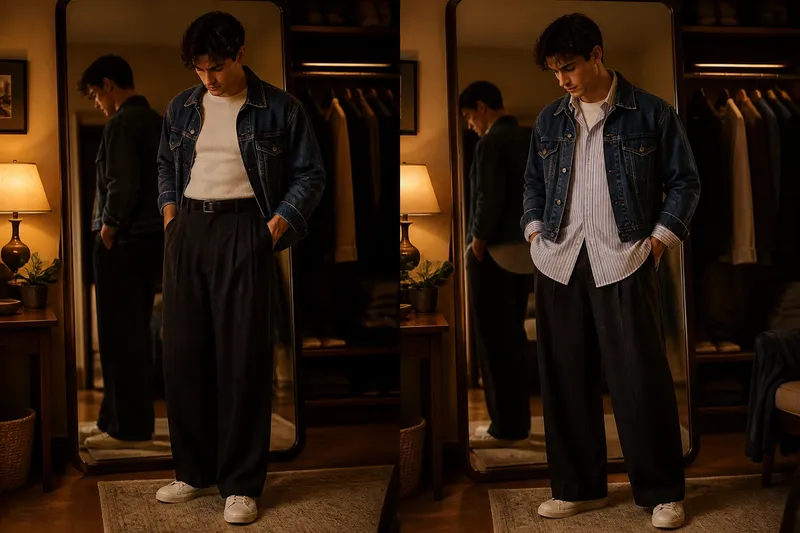
The most common jacket proportion mistake is replacing the jacket before checking the layers underneath; it can leave you with near-duplicates and the same outfit problem. With one jacket, changing the length and volume of the underlayer can create two distinct silhouettes without treating either as universally flattering.
Start with the jacket
Choose a jacket you already wear, then notice its shape while open and fastened. A cropped denim jacket, a straight blazer, and a roomy field jacket frame the layers differently, so work with one actual piece rather than an imagined ideal.
Check three details: where the hem falls, how much room the sleeves and body allow, and whether the shoulder is defined. These details affect how much of a shirt or sweater remains visible and where the outfit’s visual emphasis lands.
Use a full-length mirror and wear the shoes you expect to pair with the outfit. A jacket may look different with a substantial-soled shoe than with a slimmer one, so keep the footwear consistent while comparing layers.
Try the close balance
For the first silhouette, keep the layer beneath the jacket relatively close to the body. A fine-knit sweater, fitted long-sleeve tee, or tucked-in shirt with straight-leg trousers can reduce torso bulk and let the jacket’s outline read clearly.
Close does not mean tight. You should be able to sit, reach, and move without pulling at buttons or bunching under the arms. If a longer shirt hem shows beneath a short jacket, leave it visible for a clear line or tuck it if the edge looks accidental.
Say you have a boxy denim jacket and wide-leg trousers, and the outfit feels crowded through the middle. You tuck a fine-ribbed top into the trousers and leave the jacket open; the expected visible result is a clearer break at the waist and less fabric competing around the torso.
Try the layered balance
For the second silhouette, add visible volume or length beneath the same jacket. A relaxed button-down over a tee, a lightweight hoodie, or a longer knit can make the jacket one layer within a broader outline rather than the dominant shape.
Notice where extra volume collects. A shirt collar and hem add crisp lines, while a sweatshirt can make the upper outline read broader. If the jacket will not close comfortably, wear it open rather than forcing the layers together.
Keep one boundary clear. With a long underlayer, make its hem plainly visible rather than leaving a narrow, uneven sliver. With a bulky layer, do not force the jacket or sleeves into uncomfortable positions to preserve an outline.
Compare the combinations
Try both balances during ordinary dressing, using situations you already have planned. The aim is to notice what each shape communicates and how it works for your day, not to decide which one is better in every setting.
- Close layer: Check whether the jacket moves easily and the torso looks less crowded; if both are true, keep this pairing for a neat outline, but if movement is restricted, change to a thinner top.
- Longer layer: Check whether the hem reads as a clear line beneath the jacket; if it does, keep it visible, but if it appears as an uneven sliver, tuck the shirt or choose another layer.
- Fuller layer: Check whether fabric bunches at the shoulders or arms; if it does, switch to a thinner layer or wear the jacket open, but if it hangs comfortably, keep the fuller combination.
- Fastened jacket: Check whether the front closes without pulling; if it closes comfortably, compare the fastened shape, but if it strains, leave it open or remove a bulky layer.
- Different setting: Check whether sitting, carrying a bag, or moving through your planned day changes the outfit’s comfort; if it does, choose the easier pairing for that setting, but if it remains comfortable, keep either balance in consideration.
- Mirror photo: Check the jacket hem, underlayer length, and distribution of volume in photos taken from a similar distance and angle; if one outline matches your preference, note its specific layer, but if neither does, change one detail before comparing again.
Imagine you have a cropped denim jacket, wide-leg trousers, a fine-ribbed tee, a roomy button-down, and the same sneakers for two planned outfits. First, tuck the tee into the trousers and wear the jacket open; you see a distinct waistline and a clean jacket edge. Next, wear the button-down open over the tee, letting its hem show; the outline looks more layered, but the shirt bunches at the jacket’s shoulder when you reach. You decide the tee pairing suits a day with more movement, while the button-down works when you want extra visible layers and can wear the jacket open.
Write observations in plain language, such as “long shirt balances the short jacket” or “hood bunches under the collar.” Notes about the clothes and the shape they create are more useful than rules about which body type should wear a particular silhouette.
Which jacket proportions work?
How does jacket length affect layers?
A shorter hem exposes more of the underlayer or waistband, while a longer jacket covers more of the torso and may hide a short top. Choose the result you want: a clear break, a continuous line, or a visible layer.
Can a bulky layer fit under a fitted jacket?
It can if the jacket hangs comfortably and fabric does not bunch at the shoulders or arms. If the front strains or movement feels restricted, choose a thinner layer or wear the jacket open.
What if the underlayer extends below the jacket?
A visible hem can make the layering feel intentional when its length and edge are easy to see. If it peeks out unevenly, tuck it, change the layer, or try a jacket with a different hem position.
Should the jacket and underlayer match in volume?
Not necessarily. A close top beneath a roomy jacket emphasizes the jacket’s shape, while a fuller top can soften its outline or create a more layered impression; let comfort and your preferred shape guide the pairing.
Keep useful pairings
Keep two combinations that serve different moods or settings. One might feel streamlined under a structured jacket; the other might use a soft, longer layer to make the same jacket feel more relaxed.
Before buying another jacket, write down what your pairings need: a thinner knit, a shirt with a longer hem, or more room through the sleeves. That note turns one jacket into a practical reference for proportion, not a verdict on what you should wear.
Use one jacket to explore proportion by changing the layer beneath it, then judge the result by the shape you see and the ease you feel. One jacket, two silhouettes can give you a clearer sense of how proportion fits the day you are dressing for.