From Rebel Uniform to Everyday Reference: The Leather Jacket
The leather jacket carries different meanings across film, music, and daily dress. Learn how context changes its cultural associations and how to read it.
The most common mistake when reading a leather jacket is treating it as a rebel uniform wherever it appears. That shortcut can make an everyday outfit seem like a costume, or make a deliberate reference look accidental. The leather jacket’s cultural meaning changes with its setting, styling, and the person wearing it.
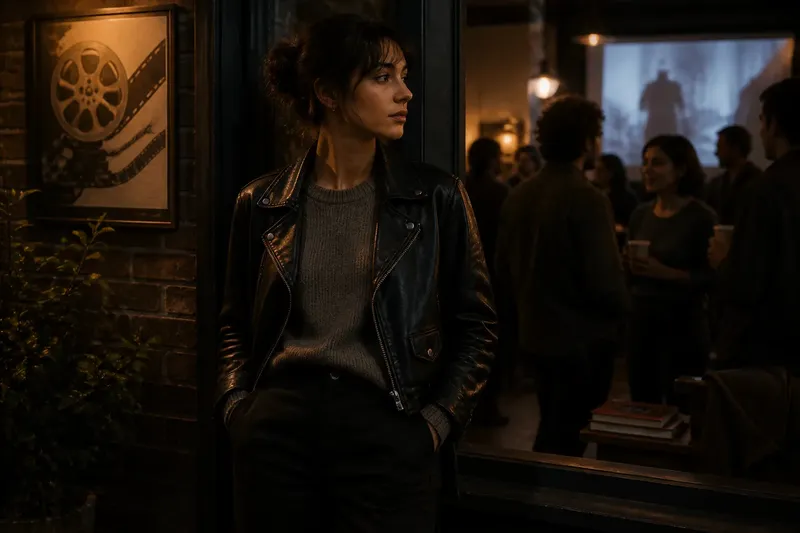
To see how those meanings shift, follow an invented situation: Maya has found a secondhand black leather jacket and wants to wear it to a neighborhood film-club gathering. She likes its weight and shape, but worries that people will read it as a claim to toughness she does not feel. Her decision is not simply whether the jacket suits her; it is what she wants the garment to say in this particular setting.
One garment, several readings
A leather jacket is both a practical object and a cultural sign. Its material can suggest protection, durability, or a connection to motorcycling and workwear. Its appearance in cinema and popular dress has added associations with rebellion, glamour, danger, independence, and nostalgia.
Those associations do not replace one another in a neat sequence. They overlap, and viewers bring different references to the same image. A jacket that recalls a screen character to one person may look like a familiar thrift-store layer to another.
Maya starts by noticing that the jacket’s identity is not contained in its black leather. She asks what its shape, finish, and styling are likely to evoke, then considers what those elements mean to her rather than assuming that every viewer shares her interpretation.
Screen images and borrowed signals
Cinema helped make the leather jacket legible as more than protective clothing. In screen stories, a character’s jacket can quickly suggest a distance from convention, a guarded temperament, or a desire to control how others see them. The audience receives that signal alongside gestures, dialogue, setting, and plot.
That context matters. A jacket worn by a defiant character in a tense scene does not mean the garment alone communicates defiance. Lighting, posture, the camera’s attention, and the character’s actions build the impression together; everyday clothing rarely arrives with that same narrative frame.
Popular dress carries screen references into ordinary life, where they can be adopted, softened, or detached from their original associations. A person may choose leather for its texture, warmth, or familiarity without intending to quote a film. Another may knowingly use a familiar silhouette to make a visual reference.
Maya recognizes that her jacket resembles the broad cultural image of a screen rebel, but it does not have the exact shape or finish she associates with a particular character. That distinction gives her room to wear it as a personal object rather than a replica.
Daily dress changes the message
In daily dress, a jacket’s meaning is shaped by its neighbors. A leather layer over a simple knit and relaxed trousers can read as a practical choice with a strong texture. The same jacket over a carefully coordinated, high-contrast outfit may feel more like a deliberate performance.
Neither reading is more correct. The useful question is whether the outfit’s overall tone matches the wearer’s intention and the occasion. A garment’s history can add a note to an outfit without dictating its whole character.
Maya tries the jacket with the clothes she already planned to wear to the film club: a soft gray sweater, dark straight-leg trousers, and plain shoes. The smoothness of the sweater and the understated shoes temper the jacket’s harder surface. In this invented situation, she expects the result to feel like her usual way of dressing with one more assertive layer, rather than a full costume reference.
She also checks the setting. The gathering is casual, and other attendees are likely to dress in their ordinary evening clothes. That makes a familiar jacket feel at home without requiring her to add more signals, such as a theatrical hairstyle or an entire outfit built around a period look.
Details that steer interpretation
Small visual details can shift the balance between rugged, polished, nostalgic, and casual. A glossy finish may feel more dressed-up than a visibly worn surface. A cropped, close-fitting cut can recall a different style tradition than a roomy jacket with large pockets.
Hardware also contributes: prominent zippers and snaps can draw attention to a jacket’s motorcycle associations, while restrained fastenings leave more room for the material and silhouette to speak. These are tendencies, not fixed codes; styling and personal associations still matter.
Wear is especially open to interpretation. Scuffs may suggest a well-used object, but they can also be decorative or simply part of a secondhand garment’s history. Maya looks at the jacket in daylight and notices a softened collar and a few shallow creases. They make it feel less like a pristine costume piece and more like something already folded into ordinary life.
She does not add a chain or a dramatic belt to reinforce the rebel image. Instead, she lets the jacket remain the outfit’s most noticeable item. That choice keeps the reference legible without insisting on a single reading.
Questions about leather jackets?
Does a leather jacket always look rebellious?
No. Rebellion is one familiar association, strengthened by screen images and popular dress, but context can make the same jacket feel practical, polished, nostalgic, or simply familiar. The surrounding clothes and the wearer’s manner help shape its reading.
What makes a leather jacket feel like a film reference?
A recognizable silhouette, distinctive styling, and other details that echo a character can make the reference clearer. Recreating several elements at once tends to read as more intentional than wearing a similar jacket with unrelated everyday clothes.
Can a secondhand jacket feel contemporary?
Yes. A secondhand garment can sit comfortably in a current wardrobe when its shape and condition work with what the wearer already likes to wear. Its earlier history may add interest, but it does not have to define the outfit.
How can I wear one without feeling like I am in costume?
Start with clothes that already feel natural to you, then add the jacket without copying a complete screen look. If the outfit feels too theatrical, remove one conspicuous reference detail and see whether the jacket still makes sense on its own.
From reference to wardrobe
After the film-club evening, Maya considers what she learned from wearing the jacket. In this invented situation, she notices that she felt comfortable when the jacket was one part of an outfit she recognized as her own. She expects to reach for it again because it adds texture and a cultural echo, not because it requires her to perform a fixed identity.
That distinction is useful when choosing any garment with a strong public image. Ask what associations it carries, which ones you actually want, and what the surrounding clothes are likely to add. Then decide whether the item works as a direct reference, a quieter nod, or simply a useful piece of clothing.
The leather jacket can hold several meanings at once because people keep wearing it in different places and for different reasons. For a personal style choice, the most useful reading is not the one inherited from a film or fashion image, but the one your outfit makes plausible in the room you are entering. The leather jacket’s cultural meaning remains flexible; your styling gives it a direction for the day.